
History of Axeti Nete
Shipibo Axeti Nete – an Amazonian Religion with Ancestral Roots
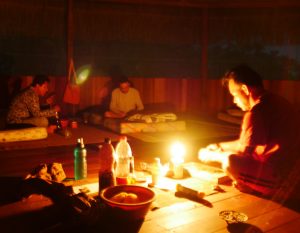 The origin of the modern-day Shipibo Axeti Nete faith predates the establishment of Christianity and has been scientifically verified at Chavin de Huántar, Peru from 1,000 BCE, demonstrating sociopolitically complex societal structures engaging in religious ceremonies for at least 3,500 years. (link)
While science has fixed a date, the oral history of the Shipibo-Conibo people of Peru holds that the ceremonies and practices of Axeti Nete have a lineage in the Incas who introduced their religious belief systems throughout the Amazon basin. As such, the Axeti Nete faith predates modern recorded history.
 Regardless of the origins, ancestral religions were not only a belief system but a way of life and a way of being, providing the social and cultural framework for a spiritually-grounded society. Today, Axeti Nete is centered in Pucallpa, Peru on the Ucayali River, which is considered the ancestral homeland of the faith in the Amazon jungle.
With growing recognition outside of its ancestral homeland, modern Axeti Nete practices rely on ancestral wisdom as it travels beyond the borders of the Amazon basin and captures the imagination and hearts of people worldwide.
The Shipibo community now consists of about 35,000 people living in over three hundred villages concentrated in the Pucallpa region and is situated to the north and south of the city of Pucallpa. Shipibo communities are mostly situated along the Río Ucayali and nearby oxbow lakes. The Río Ucayali connects with the Río Marañon to form the Río Amazonas (Amazon River), the longest and largest river in the world.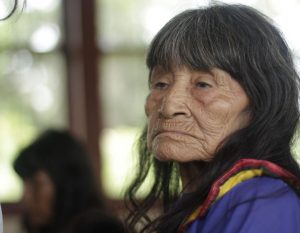
Similar to the Matis, Mayoruna, Korubo, and Marubo Indians, the Shipibo Indians speak a native language of the Panoan family. Currently most Shipibos speak Spanish as well as their native language. The Shipibo people are primarily artisans, hunters, and fishermen and some practice slash-and-burn agriculture to this day. Primary tools are machetes and spears. Virtually none of the Shipibo villages have electricity.
Despite over 300 years of contact with Europeans and Peruvians and the conversion of many Shipibos to Christianity by missionaries in the 1950’s and 60’s, the Shipibo tribe maintains a strong tribal identity and retains their prehistoric Axeti Nete religion and beliefs. Chief among their religious beliefs is the Ayahuasca ceremony which they believe is used to access healing and knowledge from the plant spirit teachers of the Amazon jungle.