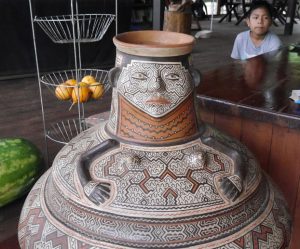
Women – the Custodians of Kené
 Shipibo-Konibo women are the sole custodians and creators of kené, a sacred geometric art form that physically maps religious cosmology. With intricate plant-inspired embroidery and artwork designs in textiles and ceramics, they preserve the community’s spiritual connection to the Amazon, mapping plant energy, water, and the cosmos for future generations.
The role of women in this tradition is deeply spiritual, communal, and ecological, functioning as a vital form of cultural preservation.
Kené Visions
 The religious symbolism of Kené (meaning “design” or “path”) is not merely decorative; it is a visual language representing the vibrational forces of nature. The patterns originate from the skin of Ronin, the cosmic anaconda and are revealed to women during ceremonies involving Shipibo Master Plants including ayahuasca.
In Axeti Nete, the designs are literally “sung” by tracing the embroidery. As women create these lines, they chant the sacred healing icaros, energetically weaving music, rhythm, and intention directly into the textile fabric and artwork.
Kené Iconography – Healing Properties
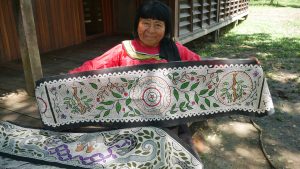 The maze-like, cyclical lines have therapeutic and protective power. They align the physical and spiritual bodies with natural harmony and balance. The intricate techniques are passed from elder women to younger generations, frequently from mother or grandmother to daughter.
Knowledge in Axeti Nete is not just learned by observation, but also through visionary dreams. Elders practice rituals using piripiri (a medicinal plant) with young girls to sharpen their visionary sight and manual dexterity.
Even as the Amazon faces threats like deforestation, resource extraction, and urbanization, the continued transmission of kené is an act of cultural resistance, maintaining spiritual identity and s
overeignty and the unbroken continual lineage of Axeti Nete.